Preaching Without Notes through Improvisation

Libri_books

A few years ago, I attended a workshop entitled: “Authentic Patience: Improvisation and Preaching.” The presentation was by Rev Mark T. Davis who is the senior pastor at First Presbyterian Church in Boise Idaho. Rev. Davis has an interesting sermon methodology that relies on riffs and improvisation like a jazz musician.

Saturation in the Text

The first step in Davis’ methodology is to become saturated in the text. He reads the text with two “teams” beginning 6-10 weeks out. This is a group of members that Davis has set up to help him in his sermon preparation. The group reads the text and state everything that comes to their minds and the things that jump out of the text.
[Read more...]

Denzel to Preachers – Just “Let It Rip”

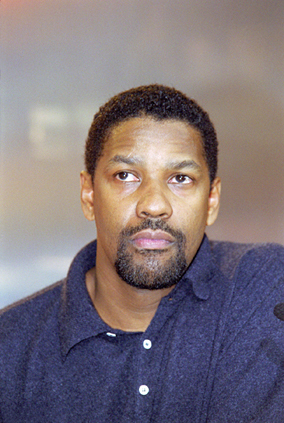
Denzel_Washington

The Talking the Walk Blog has an interesting post that seeks to derive help for preachers from an interview with Denzel Washington.

Denzel answers why he did a particular hand movement in a movie by saying:

Of course…it’s just rhythm. Acting is like music. You improvise. It’s like jazz. There is no rhyme or reason to it. It’s not a plan. I just did it. It’s a rhythm. Stanislavsky said that you cut 90%. You do all your research; and you prepare, and then you let it rip. And that’s how it is. You practice the music, you know, and then you just play it.

Now thinking about preaching, we have many tools for preparing. We exegete the text. We look at the text historically, linguistically, and theologically. We prepare by putting together a good outline and then add some good stories and illustrations. You prepare by practicing, but then when it is time to preach, Denzel encourages us preachers to just “let it rip.”

Trust the Holy Spirit, trust your preparation, and then “let it rip.”

Preaching Without Notes is not a Brain Dump

We all have heard the preacher who preaches without notes by stating everything that comes to her or his mind. You know what I mean, the preacher grabs and articulates everything. I mean everything that occurs to the preacher.

A whole ago, I heard a sermon that was just like this. The preacher had highs and lows. The preacher made some profound points. But the points had no relation to each other. Then the preacher sat down in a whimper.

At the end of a sermon like this, it is very difficult to remember either the individual points or the main point of the sermon. You can imagine what went wrong. There is no main point and thus the people remember no main point! So how do we fix this?

Glad you asked, here are four points to help you fix this problem.

  1. Sermons with or without notes should have a strong “gospel claim.” What are you saying about the good news of the Kingdom in your sermon? If you are not clear in your claim it will be difficult to be clear about what to put in your sermon.
  2. Sermons with or without notes should have a point informed and infused by that gospel claim! By that I mean at least one point and no more than one point. Well OK …if you want more than one point go ahead but make sure that they are related to each other so that they don’t obliterate each other. I fear that sometimes our 5 point masterpieces are either entirely forgotten or only 1 or 2 of the points are remembered.
  3. Sermons with or without notes should precede logically to a conclusion. And in the Black tradition that conclusion a lot of the time it will be a celebrative conclusion. I recognize that there may be some disagreement here. But I think usually if you are not headed towards a culmination people will know it at least subconsciously, and will begin to pay less attention to your message. Save your strongest point for the end, don’t end in a whimper.
  4. Sermons with or without notes should eliminate irrelevant asides. By irrelevant, I mean that they are not connected to your sermon’s main point.

Don’t jump from thought to though without any rhyme or reason. Preaching Without Notes is not a brain dump. Put your sermon together as you would if you had a manuscript. Be open to the Spirit’s leading. Follow the text. And ultimately, allow that Biblical truth to come through you to the people.

Web Seminar – Options For Preaching Without Notes

437px-Žemaitė_notes

Learn the various options for those who wish to preach without notes. This is a webseminar that I presented earlier this year.

Many SoulPreaching.Com readers have asked that this replay be presented. So here is the video of the seminar.

Methods for Preaching Without Notes – Memorize an Outline

When people ask me about preaching without notes, many assume that you must write out the whole sermon and then memorize the sermon. These preachers are looking for a method that will help them memorize such a large amount of material. However, preachers should recognize that many, if not most, preachers who preach without notes actually memorize something that looks like an outline rather than memorizing a large amount of material.

The key to keep in mind is that these preachers are largely memorizing “what” they will say rather than “how” they will say what they will say. By that I mean they have a number of concepts in mind that they have memorized. They then articulate those concepts in the sermon. The key is that the words of the sermon are not memorized ahead of time, only the concepts of the sermon.

Deductive Outline

Now the “outline” that is memorized can be in a number of forms. The first of these is your common “deductive” approach. Here you take the main sermon concept and break it down into pieces. Each piece is a part of your sermon. If those pieces are big, then you must break those down into pieces. This approach is taught in the very helpful book by Charles Koller entitled How to Preach Without Notes. I think this is a very effective method, but I would be careful not to make your outline too complex. The three points and a poem outline form probably belongs here. Many people who preach such sermons have simple points that are easily remembered.

Inductive Outline


Another way to “outline” the sermon is a inductive method. Here you are not attempting to start with the main point of the sermon and break it down, but you are attempting to slowly build up to the main point of the sermon. OFten this is done with a number of pieces and/or images that slowly reveal the main truth in the sermon. Joseph Webb’s book entitled Preaching Without Notes is a very helpful book that seeks to teach this method. Another way to outline a sermon like this is the “sequence of images” approach that Hugh Litchfield presents in his work Visualizing the Sermon: A Guide to Preaching Without Notes. The key behind this type of outline is that it is usually simply a series of images or stories that the preacher presents while slowly revealing the reason behind the sermon.

Bible Story Outline

Finally, you can think of the sermon as the representation of a Biblical story. Here you simply tell the story of the sermon and intersperse comments in the story. The key is to attempt to eliminate the difference in time between the past and the present. We help to bring the people into Biblical world.

Conclusion

The key to effective preaching without notes is not to have an extremely good memory that can help you to memorize a 45 minute sermon word for word, but to memorize an effective outline and then learn how to enlarge the points without notes by reliance on your preparation and the Holy Spirit.

Methods for Preaching Without Notes – Memorize Part of the Sermon

Another method used by preachers to limit notes is to memorize part of the message. Here the preacher takes a manuscript, but has a particular portion of the sermon that is to be preached without reliance on it. For example, there are some manuscript preachers that know their introduction so well that they do not refer to their manuscript during this portion. Others like to memorize the conclusion/celebration so that they can close strong. Still others have stories or poems or even scriptures that they memorize to help in their presentation of the Gospel in the sermon.

Less Memorization Time Needed

This method will require less time to in memorization than memorizing the whole thing, and it can be very effective. If a preacher knows the key points in the sermon, then to memorize the presentation of those points can be almost as effective as memorizing the whole thing.

Many Use Some Form of This Method

The drawback is that it can be kind of jarring to bounce back and forth between notes and non-notes. However, truth be told, many preachers who use a manuscript do bounce back and forth between their manuscript and notes-free presentation. Many do this very effectively. I would suggest that those who do this, take some thought in the preparation of the sermon which parts may be done without notes and which parts may have totally new additions due to the Holy Spirit’s editing function in the preaching moment. Then make note of these in your manuscript.

Methods for Preaching Without Notes – Memorize Whole Thing


It is sometimes thought of as the Holy Grail of preaching. We look and see them preach with a grace and style that seems supernatural, but how do they do it? How can you preach without notes in an effective manner? In the next few posts, we will look at different methods used by preachers to preach without notes.

The first method is to simply write out the full sermon and memorize it. Here you must write in a memorable fashion. However, it does require not only the time to create the sermon, but it also requires a lot of time to memorize the sermon.

Some preachers memorize the sermon by just being so familiar with the sermon through repetitious practicing. The great advantage of memorizing the sermon is that you can work on the words used in the sermon. However, you can lose spontaneity.

A preacher who does this, must be open to the moving of the Spirit who may inject words here and there and concepts. To do that, the sermon must be structured in such a way that one can easily move from one thought or point to another.

I have never attempted such an approach, but a good book that suggests this kind of preaching is Without a Net by William H. Shepherd. If you preach in this way, let me know.

Preach on Your Feet – Another Method to Notes Free Preaching

About a year and a half ago I posted an article about the preaching methodology of Rev. Mark T. Davis of the First Presbyterian Church in Boise Idaho.

Immersion in the Text


In Davis’ approach, the preacher does not attempt to determine what he or she is to say. The preacher is simply immersed in the text. The the preacher preaches out of that preparation. Note that structure is not a part of this preparation. This is a very interesting approach that may be helpful to some preachers.

Recently Fred R. Lybrand has written a book that describes his methodology of Preaching on Your Feet. That method is similar to Davis’ approach. Here the preacher is not attempting to preach a set sermon, but is attempting to let the preparation and immersion in the text flow from the preacher to the people.

On Your Feet versus Without Notes

Lybrand distinguishes between the idea of “Preaching on your Feet” from “Preaching without notes. When you preach without notes like in Joseph Webb’s approach you totally define what you will say although you don’t define “how” you will say it. You do a lot of practicing, but you know what you are to say in the sermon. In Lybrand’s and Davis’ method, you do not know exactly how the sermon will end, you simply stand up and preach and allow a combination of the Spirit and your preparation to guide you in the moment.

I have only skimmed Lybrand’s work, but I will post more information on this work as I spend more time digesting the material.

Memory Principles and Features for your Preaching – Part 1

The fundamental aspect of the memory system is to connect the thing you want to remember to your brain in a solid fashion. Tony Buzan, in his book Use Your Perfect Memory cites 2 fundamental principles that will aid you in your memory work. In our next post, we will look at the features. All of this is in anticipation of applying it to the problem of preaching without notes.

Imagination in Memory

To remember something we need to connect the thing we want to remember to our brain. There are two fundamental principles to doing that. The first is to use imagination. Perhaps the biggest problem with many who seek to remember things is that they do not make use of their imagination.

We often try to memorize dry facts or unconnected data. In addition, much of our preaching is dry and unconnected to reality because it does not make use of the imaginative abilities of the preacher, neither does it evoke the imagination of the hearer.

How does one use the imagination in preaching and memory? Well, first one can look at the text imaginatively. A good way into this is to look at it through all of your senses. I would encourage you to read my post on sensory exegesis. Taste what is happening in the text, listen to it, touch it, and smell it. Run to the father with the prodigal son. Do you feel the anticipation in the son? Do you feel the fear and hope mingled together? Do you feel the hope increase as he sees his father run to him? Do you smell the stink of the pig pen on the prodigal’s body? All of these things will bind the features of the sermon to our mind as preachers and to the mind of the congregants.

Association in Memory


The next principle of memory is association. In order to remember something, we connect it to something that we already remember in our brain.

Another mistake of those who seek to memorize things is to attempt to just memorize things unconnected. We need to first of all understand the structure of that which we are to memorize and then connect it to some structure that we already know or understand.

Preachers can use this feature by first of all understanding the structure of the sermon. And then applying that structure to something that is known in our minds. Let us say that you are attempting to memorize the historical facts behind a biblical text. What you might do is seek a parallel situation in the world that mirrors it.

Preachers often make use of this aspect of memory in illustrations. We seek to connect the Bible story to the minds of the hearers (and their memories) by comparing it to something that is in the lived experience of the hearers.

Conclusion


Good sermons make use of the two principles of memory. In addition, anything that makes use of the principles will be easier to remember for the preacher and the hearer.

A quick way to use what we have learned here is to take your main sermonic point, and every major sub point and be sure to use imagination and association in your presentation of it.

Perfect Memory and Preaching Without Notes

Remember those infomercials about “MEGA-MEMORY?” Kevin Trudeau wrote spoke about learning some techniques to strengthen one’s memory. After seeing the thing for years, I finally purchased the system off of ebay for a big reduction in cost.

After working through the system, I realized that while Trudeau’s claims were extravagant at times, his system did actually work to improve your memory. I then researched and saw that these memory techniques were used by the ancients to memorize even long speeches. In addition, I saw that the techniques that Trudeau spoke of in cheap book form by other authors. One that I particularly like is by Tony Buzan. In the next couple of weeks we will look at these memory techniques specifically applying them to preaching in general and preaching without notes in particular.

You might want to purchase a memory book like Use Your Perfect Memory or even the book form of Kevin Trudeu’s system that introduced me to memory techniques.

Storr’s Conditions of Success When Preaching Without Notes

Richard S. Storrs second lecture in the book entitled Preaching Without Notes: A Series of Lectures describes some specific conditions for success in preaching without notes. These are as follows:

  1. Physical vigor kept at its highest attainable point. – The preacher must be as healthy as possible if one is to preach effectively without notes.
  2. Keep your mind in a state of habitual activity, alertness, and energy. – This will help the preacher grasp subjects easier. Just as you keep your body active, we should keep our mind active. Storrs suggests reading a lot of material. And the kind of reading should be active, studious, and rapid. In addition, one should read widely. Also, Storrs suggests conversations with people. Finally, one should be active in many endevors.
  3. Be careful that the plan of your sermon is simple, natural, progressive, easily mastered, and is thoroughly embedded in your mind. – Here the preacher must master the general plan of the sermon. And this general plan must be simple and easily mastered. Here we are looking at the sermon from a bird’s eye view.
  4. You Should have command of sufficient subordinate trains of thought to aid you in unfolding and impressing the subject. – Here the preacher must have sufficient information in his or her mind in which to draw from, but the preacher should not feel compelled to use any individual piece of information. The key is to have a large amount of information from which to draw.

Conclusion

In Storr’s method, the preacher must memorize and have mastered the basic structure of the sermon. However the illustrations and examples that the preacher uses should not be totally planned out before the sermon is presented. The preacher should have many stories and ideas to illustrate the sermon and then allow the moment to bring whatever of these illustrations that one would present.

Storr’s General Suggestions for Preaching Without Notes

Richard S. Storrs wrote a book entitled Preaching Without Notes: A Series of Lectures. The book is made up of three lectures on this subject. Storrs presents some general suggestions in the first lecture.

  1. Never begin to preach without notes with any idea of saving yourselves work by it. – In this Storrs emphasizes that the amount of work is not less, although it is different. The preacher works on his or her sermon all day long. The job is to completely master the subject the preacher seeks to present.
  2. Always be careful to keep up the habit of writing, with whatever of skill, elegance, and force, you can command. – Although the preacher does not necessarily write out the sermon, the preacher must write at other times. This would include essays, letters, and other kinds of writing. This writing will help the vocabulary of the preacher.
  3. Be perfectly frank with your people in regard to this matter of your method of preaching. – Here the preacher lets the people know why the method of not using notes is being used. This will help the pepole be ready for possible mistakes that you will have as you try to a new way of preaching.
  4. Discharge your mind of the sermon when once you have preached it. – Here you must find a way to clear your mind of the current sermon so that there will be room for the next sermon. Storrs suggests that a good way to do this is to make your next sermon much different from this sermon.

  5. Never be discouraged by what seems to you, perhaps to others, comparable failure. – Storrs makes a couple of points here. First, no one hits a homerun everytime. Even the best lawyers lose cases, physicians lose patients. You will have sermons were not the best. Another point is that what you think is a failure may not necessarily be thought so by your parishioners. Sometimes we are the hardest critics of our own sermons.
  6. Do no violence to your own nature. – If after you have tried to preach without notes over a period of time and you are convinced that it is not a skill you can cultivate, go back to the use of the pen and reading your manuscript.

Whitefield and Extemporaneous Preaching

The Exiled Preacher has a post up on George Whitefield and Expository Preaching. Guy Davis, the author, writes about how difficult it can be to use a manuscript effectively. Certainly many of us have left our manuscript for a second to “riff” on a theme or go down a different direction. However upon attempting to come back to our manuscript we find it difficult to find the correct place. Because of this, Davis has spent the vast majority of his career as a preacher without using notes.

Time Needed

Davis notes that an extemporaneous sermon requires at least as much preparation as one that is read. The preacher must make sure that the sermon is structured well. Davis notes that this structure should be both “clear and straightforward.”

What To Memorize

The preacher does not attempt to memorize the whole sermon. There are methods that seek to do that, but I think that the most effective ones memorize some sort of outline. For example Joseph Webb, in Preaching Without Notes presents an inductive outline that is held together by a controlling metaphor. Koller in How To Preach Without Notes provides a deductive outline with points and sub points. An interesting approach is Litchfield’s in Visualizing the Sermon who suggests creating an outline of images. While I do think that preparing a full manuscript is helpful, for archival purposes as well as providing precision to word choice, having a clear outline is necessary for preaching without notes.

100% of some folks "ministry" is simply telling us who is going to hell.... Follow Us On Twitter