
Are You Feeding The Sheep or Bleeding On The Sheep?

785px-Armedforces_boxing

One of our readers, C. Johnson, wrote a perceptive comment which reads in part:

To a large degree, what is said, heard and done (in the pulpit) is all prepackaged. Even the words that are used, are for the most part scripted long before a text is exegeted and expounded.

he continued,

Too many who populate pulpits reduce the Bible to the script of the people we serve and as a result, lead them into both mediocrity and blindness.

[Read more...]

Is Your Mouth Open? Preachers and Proclamation

shutup

H. Beecher Hicks in the second chapter of his book Preaching Through a Storm has a sermon entitled How to Silence a Preacher; or, Shut Your Mouth!. Rev. Hicks preached this sermon at the ordination of a new ministry. The sermon gives a few ways that a preacher’s mouth can be closed.

We Need the Voice of the Preacher

It is certainly a terrible thing for a preacher’s mouth to be shut. We are called to speak. If the preacher does not speak, who will? In the history of African Americans it has been the preacher who has often been the voice of liberation and salvation. It has been the preacher who has given us a word of hope to make it through the dark days. It has been a preacher who has been the catalyst for movements for change. Certainly, if it had not been for the preacher, we may not have heard the word of our salvation, neither would we have heard the word for our survival or liberation. The preacher must speak, but Hicks provides a few ways that that great voice can be silenced.

Fear of Others Can Shut You Up

The first way that the preacher’s voice can be silenced, according to Hicks, is to allow the socio-political economic climate to blunt the preacher’s voice. Certainly today, if one stands up for righteousness one can be seen as attacking the prevailing order. Dr. King was condemned for standing up against the Vietnam war when many questioned why do it? Those few prophetic voices that stood up against the Iraq war when everyone was waving their flags testify that today you will be condemned. Today, if you question America on its racism or even state that it exists presently you can be condemned. Today, if you see structural systems of oppression against the poor and seek to remedy them, you will be condemned. It is easy for a preacher to just shut up and preach smooth things. It is easy to simply say as the old saying goes, “God Bless America…and pass the ammunition” but if the preacher doesn’t stand up, who will?

Lack of Morality in Personal Life Can Shut You Up.


The second way that the preacher’s voice can be muted is a what we all a moral fall in the life of the preacher. When the preacher is stealing money or running women it can have the affect of muting the prophetic voice. Certainly there are some who still give the call even though their life betrays the message, but often times the voice of the preacher whose life is filled with immorality will be muted. People sometimes expect too much of the preacher, but it is right that they expect something from the preacher. We cannnot simply apply our messages to someone else and not to ourselves. If the message is to transform systems why can’t it transform us? If the message is to transform other folks out of their vices and problems, then why not us? If I might misquote the song made famous by Mahalia Jackson…It’s time for preachers to live the life they preach about in their sermons.

Liberation for All?

Another way that the voice of the preacher is muted, according to Hicks, is on the issue of women in ministry. Preacher’s who preach liberation often forget to include women in that preaching. Preachers cannot simply preach the message of equality and justice at America while we allow it ourselves. Some women have to leave Black churches to find someone to acknowledge their ministerial gifts. Certainly it is changing and there are many Black churches that celebrate the gifts of women in ministry, but too many still hold America to a higher standard than they hold themselves. The preacher can’t be silent on allowing women to minister if the preacher is to sound the clarion call of justice.

Will Money Shut You Up?

Hicks also reminds us of the congregation using money to shut their preacher;s mouth. Too many churches want a preacher who is just gonna preach sermons about the money that they are going to get or the job that they will obtain becuase of God’s goodness. Too often the preacher who preaches against individual and corporate sin will be taking their job in their hands. Some congregations will be ready and willing to vote a preacher out if she or he “steps on toes.” But a preacher can’t allow the desires of the congregation to mute the gospel message. When we all get to heaven, the sinner will be happy that you reminded the sinner of sin. That may mean that some preachers will get fired, but the preacher has gotta preach. My homiletics professor said that the preacher should always have a “just in case” fund. Just in case you get fired, you have something to fall back on. The reason is becuase preaching the message of God will sometimes get the preacher into trouble. We cannot simply be quiet to keep our jobs.

Conclusion

Often the people try to shut us up. But we preachers must preach the message that God has called us to preach. In the last days, this message will go forth, and will transform those who are true of heart. Praise God that there are some preachers who will not allow the things delineated by Hicks to shut them up. Let us pray that we will be one of those preachers.

Something to Say or Say Anything

Megaphone

Lowell Erdahl, in the book Best Advice for Preaching, quotes someone who said: “There are two kinds of preachers–those who have to say something and those who have something to say!” A preacher gains something to say by connection to the divine through the spiritual disciplines including prayer and study. Having something to say comes from an in-depth look at the scripture. Having something to say also comes from looking deeply at life as well as the congregation’s life. Having something to say comes from time and in-depth work.

However, some preachers simply “must say something.” These preachers take extreme shortcuts. They copy a sermon off of the internet because it is not important what they say, but that they have something to say. They simply look for something to “shout the church.” They grab the latest edition of a sermon magazine and preach a sermon verbatim. They have not done the work that is necessary to have something to say. Too often preachers who must say something will whoop or yell or use some other aspect of African American preaching style to hide the fact that they don’t have anything to say. Sometimes the people are shouting so loud they don’t realize that the preacher has nothing to say.

The great blessing is that any preacher who God has called can have “something to say” rather than just one who “must say something.” It is time to get back on that devotional program of Bible study and prayer. It is time to start looking at the scripture exegetically. And perhaps the hardest thing, if you don’t have something to say, make use of those others who do have something to say. Do not give the people just anything because you don’t have something to say. This weekend, find out what God wants you to say and then Preach it Preacher!

How To Analyze A Sermon

Profile Of A Businessman

I will never forget my first homiletic class where the instructor told us to “analyze a sermon.” I had no idea where to begin and the whole idea seemed difficult. But I then found out that by analyze they simply mean look at the sermon “critically” and “closely.” Pull the sermon apart and look at the pieces individually. Then see how the pieces fit together. These are all parts of analyzing a sermon effectively. Sermon analysis works best when you are analyzing your own sermons. So in this article I want to give you some questions to ask yourself as you analyze your own sermons to become a more effective proclaimer of the Word of truth.

The Main Truth, Important Truth and Portable Truth

The first question you want to ask is what was the purpose of the sermon? Was it powerfully conveyed? Too often we either make the main point cloudy by not lifting it up high enough, or we simply do not have a decent idea of what our main point is. When you do either of these things that cloud up your main point, you will make it difficult for the people to know what you are teaching.

Was the sermon important? Some have questioned the idea that something can be true and not important. I do believe that there are things that are true, but are not important enough to be preached at this time, but you don’t have to believe that. Whether you believe everything that is true is important or not, whatever you preach, you need do clearly articulate how it is important. Don’t leave your people wondering or guessing. Help them to find this by your proclamation.

My homiletic instructor, Rev. Dr. Brad Braxton, used to tell us that we need to figuratively package the truth of our sermons into pouches that our people can take with us and use during their daily lives. It is one thing to teach truth, it is another thing to teach important truth, and it is best to present important and portable truth. Let your people bring that main point with them and be in a position to use it in their daily lives. Have you done that in the sermon?

Using the Bible and Illustrations

First there are issues regarding the use of the Bible. Look at which scriptures are used. Are they used legitimately? Is it the correct scripture to use in this case? How are the scriptures used? Sometimes scriptures are used to illustrate truth. Other times they are used to establish truth. Sometimes they are illegitimately used as a springboard to what the preacher wishes to say. Sometimes the scripture even says the opposite of what the preacher said that particular scripture says. At any rate, listen to how the scriptures are used in the sermon. Ask yourself if the use of the scriptures are valid and helpful.

Related to this is the use of stories and illustrations. What stories are used to illustrate truth? Are they effective? What could be done to make the sermon better? Do the stories overpower the points of the sermon? Do the stories help the sermon?

Analyzing Structure

Next you want to look at the structure of the sermon. What are the parts of the sermon? How do they fit together? What are the reasons for the parts? How does the sermon move towards ending? How is the introduction structured? There are many different ways of structuring a successful sermon, learning different methods will help you in your efforts to improve you own sermons. Always make sure that your own sermons move forward properly.

Conclusion

Ultimately there is not only one proper way to analyze the sermon. I am simply calling you to look very closely at the sermon. When you look at your sermons closely you may ask some of these questions, you may ask more questions, but in the end, please look closely at your sermons before and after you present them to your people.

Is Your Preaching One Sided?

Silver balance

Warren Stewart, in Interpreting God’s Word in Black Preaching, writes:

He or she who interprets and preaches the Word must identify with the Word in such a way that the Word will both support and challenge those to whom the message is directed.

Note that the word is allowed to “support and challenge.” Again this is a call for a wholistic and balanced message. Too often we like one side or the other. The preacher who always emphasizes the “unconditional love” of Jesus without ever moving on to the ethical response to that Love. In contrast, there is the preacher who always emphasizes what the people are not doing but never supports the hurting in the congregation. There is the prophetic preacher who sees herself as a “prophetic voice” to clean up all the mess that is in the congregation but never feels the need to pastorally apply the balm of Gilead to the real pains of living in this world.


In short, the Bible challenges and comforts us. The Bible assures us that God is with us in the pains and hurts of life, but also challenges us to live the life that God has saved us into. The Bible lets us know that weeping may endure for a night, but joy comes in the morning, but it also challenges us to live a life of service. The Bible teaches us that God loves us, but it also teaches us to love others.

Great preaching recognizes that God has called the preacher to both be a prophet and a priest. To both speak the oracles of God and apply the hope that God has purchased with us with God’s Son’s blood. Great preaching will not fall into the trap of only challenging, neither only comforting, but to have a full ministry that does both of these and more as we look towards that coming Kingdom of God.

Five Benefits of Sermon Planning

Planning

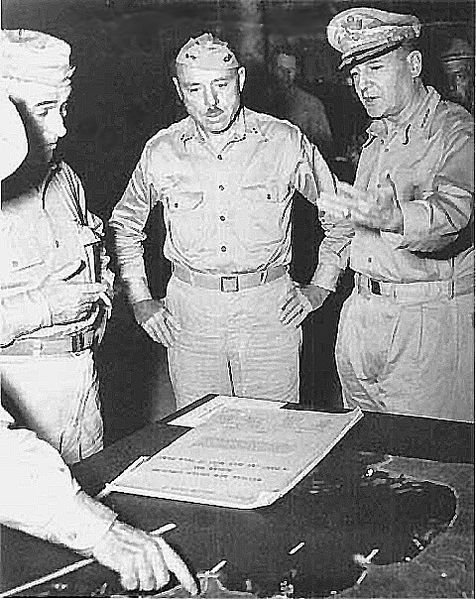
Military Plan Metaphor For Sermon PlanningMany preachers have preached sermons that were not prepared from making use of sermon planning. Often the sermon lands us in Flunkersville and we resolve never to be in this position again. However, the next worship service approaches so quickly and the other demands of ministry and life force us to yet another sermon that we did not prepare adequately.

But, there is a way around this. It is called Sermon Planning which is the first step in my own homiletic program called Supercharge Your Sermons. In this article I want to give five benefits for Sermon Planning that I hope will convince you that this needs to be done in your own preaching ministry.

1) Sermon Planning helps us to make more economical use of our time

One of the questions that I often receive is: “how can we plan our sermons when we don’t have enough time to prepare sermons?” What the questioner doesn’t realize is that in the grand scheme of things, sermon planning helps us to make greater use of our time.

A good sermon plan first of all allows preachers to prepare at all times. When you are in the grocery checkout line, you can think about either the next sermon or any sermon that you have in your plan. Illustrations come to mind at any time. You can capture them rather than simply forcing them to fit at the last minute or attempting to find a sermon illustration from books. Yes, good sermon planning allows the preacher to make greater use of her or his time.

2) Sermon Planning allows the preacher to more easily address the people’s real needs

This is true because sermon planning allows us first of all to find the people’s real needs. We no longer make assumptions about what is needed in the congregation, we analyze the congregation to determine them.

When you construct a sermon plan, you give yourself a chance to plan in the people’s needs in a much greater way than when you are preaching week to week without a sermon plan. You can plan for a sermon series to address a weakness in your congregation or perhaps throw in a few sermons to strengthen the strengths of the congregation. When you plan, you and the Spirit decide what will be the larger direction of your pulpit ministry more than what would happen if you preached week to week without engaging in sermon planning.

3) Sermon Planning allows us to see our “blind spots”

All preachers have “blind spots” in their preaching ministry. These are areas where we either don’t preach or don’t spend enough time preaching. When we have such issues we deprive our congregation of certain themes that may be needed by the congregation.

Sermon Planning will help us see these blind spots. Just seeing them is helpful. An adequate sermon plan also will helps us determine how much we need to preach on some of these issues in our particular congregation. When you plan, you can put in sermons that address these places that we would normally ignore if we did not go through the effort of planning our sermon ministry.

4) Sermon Planning allows us to preach a more broad message

Related to that, those who preach sermons derived from week to week preaching (without a plan) can preach a limited message. The sermons address the same themes. They often exhibit a limited theology. “Ain’t God Good” might be the only theme addressed. Or other preachers may end up with a “You Need to Live Right” message. Both of these themes are true and valuable in and of themselves, but they are not the full counsel of God. The full counsel would include both of these themes and more. A good way to broaden our message is to engage in sermon planning.

5) Sermon Planning allows us to spend more time on exegesis and sermon construction

One of the great things that sermon planning does is that it removes the frantic search for an “idea” or “thought” or “text.” The text and a basic direction are taken care of in the plan. Now you can immediately go into exegesis and then sermon construction.

Certainly there are times when we set our plan aside as the Spirit guides us in another direction. But sermon planning helps us to preach a well rounded message to create a well rounded people. I believe that sermon planning will improve your preaching and help you to move your preaching ministry to the next level.

How do you put together a plan? Here is a link to a broad overview of the process of sermon planning. In addition, you can find out more in our coming Supercharge your Sermons 2.0 program.

The Importance of Staying Ready

blackwoman

blackwomanOne preacher asked me if he should accept last minute invitations to preach. As an associate minister in a church where other preaching associates received most of the preaching opportunities, this preacher wondered about accepting such invitations.

The preacher must keep in mind a few important considerations before accepting such an invitation (or assignment whatever the case may be). First, can you give a solid sermon by the time you need to preach? The people who come to hear a word from the Lord expect and deserve a well thought out, well constructed, and well delivered word that God has given you to give to them. If you don’t have enough time to do that, then you aught to turn down the invitation. Note that I said, well constructed, though out, and delivered. Don’t just warm over a half concocted presentation and whoop at the end of it. Such sermons are like the offering of Cain, devoid of the transformative fire from heaven.

In addition, if you are not ready, you may actually end up with less invitations as you become known as one who half-steps in the pulpit. Such a reputation can truly be the kiss of death to preachers who do not receive many opportunities to preach.

So how can you be ready for these opportunities that come along? Simply “be ye also ready for ye know not…” When I was younger the older preachers used to tell the younger ones to always have a sermon in your Bible. You never know when you will be called to preach it. Rev. Napoleon Harris, before he accepted his first parish assignment, used to construct a sermon every week even though he had no assignment or place to preach it. Such diligence and hard work will pay off in the end.

Simply put, new preachers and associates will not always have the time that they wish to put together a sermon when the invitation comes, the only way to be ready is to stay ready by constructing sermons that can be preached at any time.

Let the Bible Lead

biblelight

biblelightSome of us are guilty of using the text.  We have the idea we want, we find the text that appears to say what we want it to say.  And then we quote it as if we are allowing the Bible to lead.  We then go to another idea that we want to present, go find a text that appears to say that and then we end up with a final idea that we want to preach, and find that text that appears to say it and then we whoop and sit down.

Note that it is not the Bible that is leading or guiding, but it is our own idea of what we wish to present.  We are not preaching the Biblical word, we are preaching our own ideas with an aleged surface reading of some texts to back them up.  This kind of preaching ends up with a  congregation that doesn’t really know what a text says until they go talk to their preacher.  The Bible is not in the driver’s seat, but the preacher is.

In addition, such preaching can end up with a congregation majoring in what the preacher thinks are the fundamentals and not majoring in what the Bible majors in.  Let the Word speak!  Go to the Bible.  You may come to a text becuase you think it is going to say what you want it to say, but have enough intergrity to allow the text to speak.  It may surprise you.  It may agree with you, and then again, it may totally change your sermon.  Let it…Let the Bible take the center spot.

Evaluating a Sermon Outline

There are multitudes of sermon outline sites. Some of them require you to pay for the outline, others are membership sites that give you access to thousands of outlines, and still others are completely free.

Some have asked me how can you use these outlines to effectively preach a unique word to the people? The answer to this question should be broken up into three components. First how can you evaluate the effectiveness of the outline, how can you modify the outline for use, how do you put flesh on the bones of the outline for preaching? In this article we will look at the first of these questions.

Is the Sermon Derived from the Chosen Scripture


While outlines are all over the place, many of them are either totally unusable or need modification before using. The first question one should ask when evaluating a sermon outline is: “Is the outline derived from the text?” Read the text of scripture and then read the outline. Think about it. Are they related?

In many cases this test will cause you to eliminate a lot of the outlines you find on the net and even in some books. It is as if he author simply thought up a few points that seemed “religious” and wrote them down as an outline for a sermon. However, such outlines would require to much work to salvage, so I would suggest tossing it and going on to another one.

Is it One Sermon?

Another common problem with many of outlines is that there is more information than you can adequately present in one sermon. You will see points, sub points, and sub points. Often there is enough information in the major points for each of them to become a sermon in a sermon series.

I heard a preacher once give a sermon on the end time. The preacher talked about signs in the social world, economic world, political world, etc. There were about 10 of these “worlds” and the sermon went on for 2 hours and actually felt like the length was 8 hours. The preacher actually had a sermon series that he delivered in one sermon rather than one sermon. So read the sermon outline and ask yourself, “Is this one sermon or many sermons?” The nice thing about this is that if you have a series, you can use the outline, rather than simply throwing it away. Use it to plan your sermon series.

Is this a Religious Lecture or a Sermon?

Not too long ago another preacher delivered a presentation that talked about the Q-source and Mark. The preacher defined Greek terms. the preacher even gave helpful background to understanding the text. However, the preacher did not call for change. The preacher didn’t seem to have a point beyond giving information to the congregation with religious material.

Some outlines suffer from now having what Henry Mitchell calls a “behavioral purpose.” Read the sermon outline. What is the purpose of the sermon? If you can’t see where it calls for change in wayward humanity, or celebrate the good news, or confront broken society, then you probably can’t use it.

Is it True?

Does the outline present the Gospel in a way that you understand? If you disagree with an outline, then toss it. You may disagree with the theology of a particular outline. In addition, there may be points that are just factually wrong. You may be able to salvage such an outline, but think carefully.

Conclusion

There are so many sermon outlines available that you might take a peak at a few here and there. However, it is still best to generate your own sermon outlines from interaction with the text and the Spirit. If you do need to use a sermon outline, please evaluate it before preaching. I hope this short article will help you do just that.

How Many Texts to Preach?

Preaching multiple texts can derail your sermon. It should be very clear to everyone who is listening what your main point and your main text is. If you have too many competing points or too many texts, the people will get lost and will simply choose one of the points to focus on, or check out and wait until you start whooping (or whatever kind of celebration you do) to check back in…

Use Other Texts Strategically

Now certainly you can use other texts. You can bring them in, but always keep in mind that these other texts are supplemental to your main text. They are illustrating or bringing out the ideas in the main text. They are not for the purpose of bringing in completely new ideas that may take you down another street that simply leave the people lost.

What am I talking about? Well if you are preaching John 3:16 about the love of God, and then you decide to bring in 1 John 3:1 to give greater depth to the love, or to illustrate or define that love. That is fine, appropriate, and needed. However, if you allow 1 John 3:1 to take you to a “side point” that is not related to the main point of either the sermon or John 3:16, then you could easily fall into the trap of preaching 2 sermons at the same time. The people wonder what is the main point, and they simply choose one of the points which may or may not be the one that you have put all your effort into preaching.

Preach One Text

In short, preach one text. Don’t tell irrelevant stories that may detract from the message. One popular preacher always begins his sermons with a story that may or may not have any reference to the message. It is just to get a laugh and probably to get the people engaged. But what if your story is the only thing they remember, and it was unrelated to the text and the sermon? Only tell relevant stories.

If you like that other text and you think you want to drop that point, that is true, but not relevant to the point of your sermon, then guess what, you have another sermon idea that you can develop into a full fledged sermon. Don’t muddy your current sermon with ideas that will only confuse your people. Preach one strong point, any supporting points you wish to preach, and sit down.

When Is Preaching More Difficult Than It Should Be?

John Claypool, in Best Advice for Preaching said that when we use preaching to get something for ourselves, rather than to give as an act of love, then the sermon will have great tension. And I agree…

Transforming Grace

Some preachers are condemnatory when they should be gracious. You know the kind of preacher I am talking about. They are ever looking for someone or something to condemn. Every week there is another group that comes under the ire of this kind of preacher. Meanwhile God is wanting to share the grace that heals some in that congregation.

And other preachers, in the name of grace, are sappily accepting of everything. You don’t know what God expects of humanity because these preachers never get to that. They are too busy talking about the benefits of grace that they never get to the responsibilities of grace.

Need to Have Sermonic Planning

The great difficulty is that if we don’t do some sort of planning, there is a tendency to gravitate to sermons and themes that address something in the life of the preacher rather than the needs of the people.

But the good news of the Gospel includes the grace that some ignore, but it also is a solid life changing grace that makes a real difference in the life of the people. A confrontation with the transformative power of God will give you the grace and forgiveness as well as the changed life. So preachers should address their own issues by applying that grace to their own lives…then they won’t force on the people sermons that are only a misguided subconscious attempt to satisfy their own needs.

Preaching Doctrine or Unique Denominational Teachings

This is a common question. How do I preach doctrine. We have some beliefs as Christians that we need to preach. Doctrines such as the deity of Christ, Salvation by Faith, and perhaps the Trinity.

Related to this are the questions from various tradtions. For example, a Pentecostal asked about preaching on the Gifts including speaking in tongues. An Adventist asked about preaching the Sabbath. A Holiness person wanted to know about preaching on Biblical Holiness.

Common Way of Preaching These Things

Now sometimes these types of sermons end up being preached in a problematic way like this:Don’t Do This

  1. Describe the Doctrine
  2. Prove the Doctrine
  3. Encourage the People to Believe the Doctrine OR Threaten People with Disbelief
  4. Tack on an Celebration about Going to Heaven if you Believe or Practice the Doctrine

However if a doctrine is valuable then it should have present benefits and not just future rewards for right belief. In addition, if the doctrine is true, it should have something to say that will help those on the underside of society that needs help.

Preaching to Practical Needs of Humanity

First, the brunt of African American preaching is in being practical. We are speaking to the real practical needs of humanity. So your first order of business is to find the practical difference that your particular doctrine makes in daily living.

Certainly this doesn’t preclude the need to define and describe the doctrine. However, if the doctrine is going to be made real in the lives of your hearers, then the doctrine must have practical contemporary ramifications. It is these practical contemporary ramifications that you need to make clear in your sermon.

Preaching to Those Who Need a Word of Hope

Next, we are speaking a word of hope to those who find their selves with their backs against the wall. So we need to find a word of hope in the midst of pain. Doctrines or teachings should help our people. They should help us interpret life in light of God’s perspective.

Our Denominationaly unique teachings should help us interpret life in light of our own heritage sent to us by our ancestors. So it is our job, as preachers, to take these doctrines and help our people understand how they help us deal with the world we find ourselves in.

If you are going to preach doctrines, that is good and important, but don’t fall into the trap of teaching doctrine in such a way that it is irrelevant to our lives. Such preaching is not being true to our ancesters who worked through these doctrines that they have passed on to us.

Preparatory Plan – Supercharged Sermons Phase 1

In seven posts we will take you step by step through a system of sermon preparation that is based in the African American Tradition. I have called it the “Supercharge Your Sermons” system. The first phase is to have preparatory planning.

Supercharged Sermons require some sermonic planning. While it is true that many preachers don’t plan past the sermon that they are preaching this week, if you are going to put your sermons in overdrive, you need to plan in advance what you are to preach. It is my contention that the Black Preaching Mindset should help us in this endeavor.

I have begun teaching Preparatory Planning in 5 steps that I will delineate:

Step 1: Prayer – and a Prayerful Attitude

The first step is to recognize that God is needed in your sermonic planning. We cannot know what to preach unless we get help from “On High.” So pray and ask God to guide your steps as you attempt to determine what is needed by your congregation.

Step 2: Where is the Preacher

Who are you as a preacher? If you do not know where you are, then you will often misdiagnose the needs and problems of your congregation. Let me tell you what I mean. Often, if a preacher is not aware of the preacher’s own faults and problems then it will push the preacher to take one of two roads. The preacher will either minimize that problem, or maximize that problem as the only problem.

For example, if the preacher is struggling with gossiping. The preacher may preach sermons almost exclusively about the sin of gossiping irregardless of if this is a problem for anyone else but that preacher. If not that, the preacher may be inclined to ignore the problem even if it is rampant in the preacher’s church (as it normally is). My main point is that if the preacher is not aware of where the preacher is, these issues may guide the preacher into sermons that are not needed. So step one is to know who you are and what you are struggling with so that you don’t allow it to unnecessarily guide you into sermons that don’t hit the spot of need in your congregation.

Step 3: Where is the Congregation

Where is the congregation right now? You need to understand the real congregation. Don’t make assumptions. What are its struggles? What does it need to deal with? What has happened in the life of the congregation? Once again, I wish to emphasize don’t make assumptions. Sometimes preachers find themselves in a congregation that is a part of a denominational body that is known for legalism. If that is the case, don’t make the assumption that your particular congregation has a problem with legalism just because the main body has this problem. Your church may be one of the few that has the opposite problem. Maybe your congregation has another problem altogether.

In any case, study your congregation to find out where it is right now.

Step 4: What is God’s ideal for the Congregation?

There are a couple of issues here. You have to know what is God’s ideal FOR THIS CONGREGATION. Today we live in an era of one size fits all ministry. Go grab the latest church growth or ministry book and force the cookie cutter ministry on your congregation and then you will have a powerful mega ministry. But, it is my belief, that God has different roles for different congregations based on the gifts and history of that particular congregation.

So I say look at what is the meaning of Church and filter that with the realities of the church where you are preaching. Then you will have a template for God’s ideal for your particular church. This template should consist of themes that need addressing in your congregation.

Step 5: Where is God At Work Now?

Ok now you have a number of themes that need preaching in your congregation. Now look at these themes and look in your congregation. You should see God already working to address these themes in your congregation. You might see, for example, the layperson working to start a ministry even though the majority of the congregation thinks ministry is a spectator sport. You might see the mother in the church showing and living grace in the midst of a congregation that has too little grace.

Now you have themes and you see where God is already working. So you know which themes are being addressed in your congregation right now. It is your job to aid God in addressing these themes.

Step 6: Create Sermonic Plan to Take You from Where They are To Where They Should Be

Now you are in a position to construct a plan. You have looked at the real needs of the congregation. You have looked at your own real needs. You have factored all of that. Then you have looked at what you believe God’s plan for your particular congregation. And you have a list of themes that are already being addressed in your congregation. Now you construct a sermonic plan to take the congregation from where they are to where they need to be.

Here you select scriptures that will help you address these themes and go on ahead and preach these sermons.

Preaching Course to Address This Step

This is the basic steps needed to construct a sermonic plan that helps you address that which needs addressing in your congregation. If you would like mroe help in putting together a sermonic plan, then I would encourage you to sign up for the Supercharge Your Sermons preaching course that you can find at: http://www.superchargeyoursermons.com.

That course is the premier Interdenominational African American Preaching course delivered over the web. Sign up and become a member.

Preaching Tips: Is The Bible Your Springboard or your Base? http://t.co/2odY57Sts7 Follow Us On Twitter